The 10-Minute Kitchen Reset Routine After Dinner
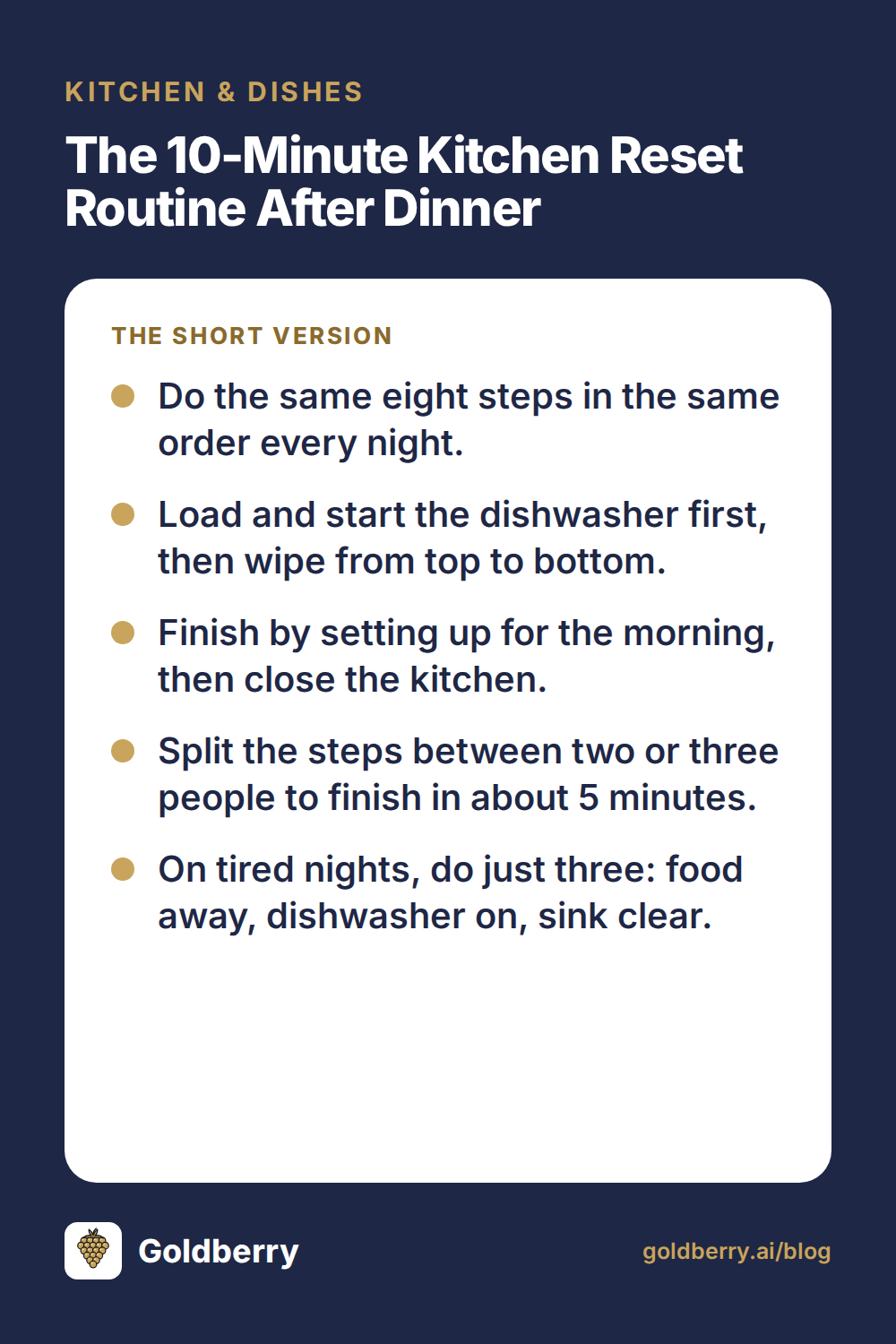
A kitchen reset routine that takes about 10 minutes: the same eight steps after dinner, in order, so you wake up to a clean kitchen and an empty sink.
A kitchen reset routine is a short cleanup you do right after dinner, in the same order every night: load and start the dishwasher, wipe the counters and stove, clear the sink, sweep, and set up for the morning. Done in a fixed order, it takes about 10 minutes, and you wake up to a clean kitchen.
Keeping the same order is what makes it quick. When you don't have to decide what comes next, you move faster and nothing gets skipped.
Why the same order every night makes it fast
Cleaning a kitchen without a plan means doing things twice. You wipe the counter, then scrape a pan and splash it. You sweep, then brush crumbs onto the clean floor.
A fixed order fixes that. Each step leaves things ready for the next one.
Dishes go first because they make the most mess. Counters come before floors because crumbs fall down. Morning setup comes last because it only works on a clean counter.
After a week or two, you stop thinking about it. Your hands know the next step without being told, and that's where the speed comes from.
The kitchen reset, step by step
Here's the order, with rough times for a normal weeknight after dinner.
| Step | What to do | About |
|---|---|---|
| 1. Clear and load | Food away, dishes scraped and loaded | 3 to 4 minutes |
| 2. Start the dishwasher | Detergent in, cycle on | 30 seconds |
| 3. Wipe counters | Top to bottom, back to front | 1 to 2 minutes |
| 4. Wipe the stovetop | Spills and splatters, once it's cool | 1 minute |
| 5. Empty and wipe the sink | Hand-wash items done, sink wiped | 1 minute |
| 6. Floor | Sweep or spot-clean | 1 to 2 minutes |
| 7. Trash | Take it out if full | 1 minute |
| 8. Set up for morning | Coffee, breakfast, lunches | 1 minute |
That adds up to about 10 minutes on a normal night, closer to 15 after a big cooking day.
1. Clear and load
Put leftovers in containers and into the fridge first, so food isn't sitting out while you work. Then scrape plates and load the dishwasher.
If you load as you go during the day, this step is short. For the fastest method, see how to load a dishwasher.
2. Start the dishwasher
Run it every night, even if it isn't packed. You empty it in the morning and start the day with room for dirty dishes. Here's why it's worth it to run the dishwasher every night.
3. Wipe counters top to bottom
Clear anything that doesn't belong on the counter. Wipe higher surfaces first (open shelves, the top of a countertop microwave), then the counters, working from the back toward the edge. Sweep the crumbs into your hand or onto the floor you're about to sweep.
4. Wipe the stovetop
Once the burners are cool, wipe up spills and splatters. A quick nightly wipe stops them from baking on, which saves a real scrubbing session later. Follow the maker's instructions for glass or induction tops.
5. Empty the sink and wipe it
Wash anything that doesn't go in the dishwasher (good knives, wooden boards, cast iron), dry it and put it away. Then wipe the sink and faucet. An empty, clean sink is the clearest sign the kitchen is done.
6. Sweep or spot-clean the floor
You don't need to mop every night. Sweep the main work area, or use a damp cloth on sticky spots.
7. Take out the trash if it's full
If the bag is full or anything smells, take it out now. Put a fresh bag in so the morning starts clean.
8. Set up for the morning
Fill the coffee maker or kettle. Set out bowls for breakfast, or pack what you can for lunches. One minute here buys you a calmer morning.
Close the kitchen
Once the reset is done, the kitchen is closed for the night. No more snacks that leave crumbs and no more cups in the sink. A glass of water is fine.
Closing the kitchen protects the 10 minutes you just spent. It also gives the whole family a clear signal that the day's cooking and eating are over. Some families turn off the main kitchen light as the cue.
A printable kitchen reset checklist
Copy this and stick it inside a cupboard door or on the fridge until the order is automatic.
- Food away, dishes loaded
- Dishwasher on
- Counters wiped, top to bottom
- Stovetop wiped
- Sink empty and wiped
- Floor swept
- Trash out if full
- Coffee and breakfast set up
Most people only need the list for the first couple of weeks.
Keep your supplies in one spot
A reset slows down when you have to hunt for things. Keep everything for it in one place, near the sink:
- One all-purpose cleaner that's safe for your counters
- A stack of clean dishcloths or microfiber cloths
- Dish soap and a brush for hand washing
- A small broom and dustpan, or a handheld vacuum
- Spare trash bags in the bottom of the bin
Use one cleaner for the whole reset, and never mix cleaning products. Some combinations, like bleach and ammonia, release harmful fumes.
Drop used cloths in the laundry each night and start tomorrow with a fresh one.
Split it between family members
The reset goes faster with two or three people, and it shows kids that the kitchen is everyone's job. Split it by step, not by "come help me," so each person knows exactly what they own.
| People | Person A | Person B | Person C |
|---|---|---|---|
| Two | Steps 1, 2, 5 (dishes and sink) | Steps 3, 4, 6, 7, 8 (surfaces, floor, trash, morning) | |
| Three | Steps 1, 2 (dishes) | Steps 3, 4, 5 (counters, stove, sink) | Steps 6, 7, 8 (floor, trash, morning) |
Kids can take the simpler steps: clearing the table, wiping a counter, taking out the trash. For ideas that fit each age, see chores for kids by age.
Rotate jobs every week so nobody gets stuck with the least favorite one.
What to skip on tired nights
Some nights you won't do all eight steps. That's fine. Do the three that matter most and let the rest wait:
- Food away. Leftovers in the fridge, nothing left out overnight.
- Dishwasher on. Everything that fits goes in, and the cycle starts.
- Sink clear. Wash and dry knives, wooden tools and cast iron now, because soaking can ruin them. Fill stuck pots with hot, soapy water and leave them on the stove to soak, so the sink itself stays empty.
Skip the floor, the stovetop and the morning setup. You'll still wake up to a kitchen that takes a few minutes to finish, not an hour.
Bigger jobs like wiping out the fridge and cleaning the oven don't belong in the nightly reset at all. Put them on the monthly list in your cleaning schedule instead.
FAQ
What is a kitchen reset?
A kitchen reset is a short cleanup right after dinner that returns the kitchen to a clean starting point. You put food away, run the dishwasher, wipe the counters and stove, clear the sink, sweep and set up for the morning. Done in the same order every night, it usually takes about 10 minutes.
How long should it take to clean the kitchen after dinner?
Plan on about 10 minutes for an ordinary meal and a few more after a big cooking day. Loading dishes through the day shortens it, and with two or three helpers it can drop to about 5.
What does closing the kitchen mean?
It means the kitchen is off limits for food once the reset is finished, apart from water. Nothing new lands in the sink, so the counters you cleaned after dinner are still clean when you come down for breakfast.
Do you need to mop the kitchen floor every night?
No. A quick sweep or a damp cloth on sticky spots is enough after dinner, and mopping can wait for once a week. Wipe up anything slippery right away, whatever day it is.
How do I get my family to help clean the kitchen?
Assign specific steps by name instead of asking for general help, and rotate them weekly so the unpopular jobs get shared. Younger kids can clear the table or wipe a counter. Doing it together right after dinner makes it a routine instead of a request.