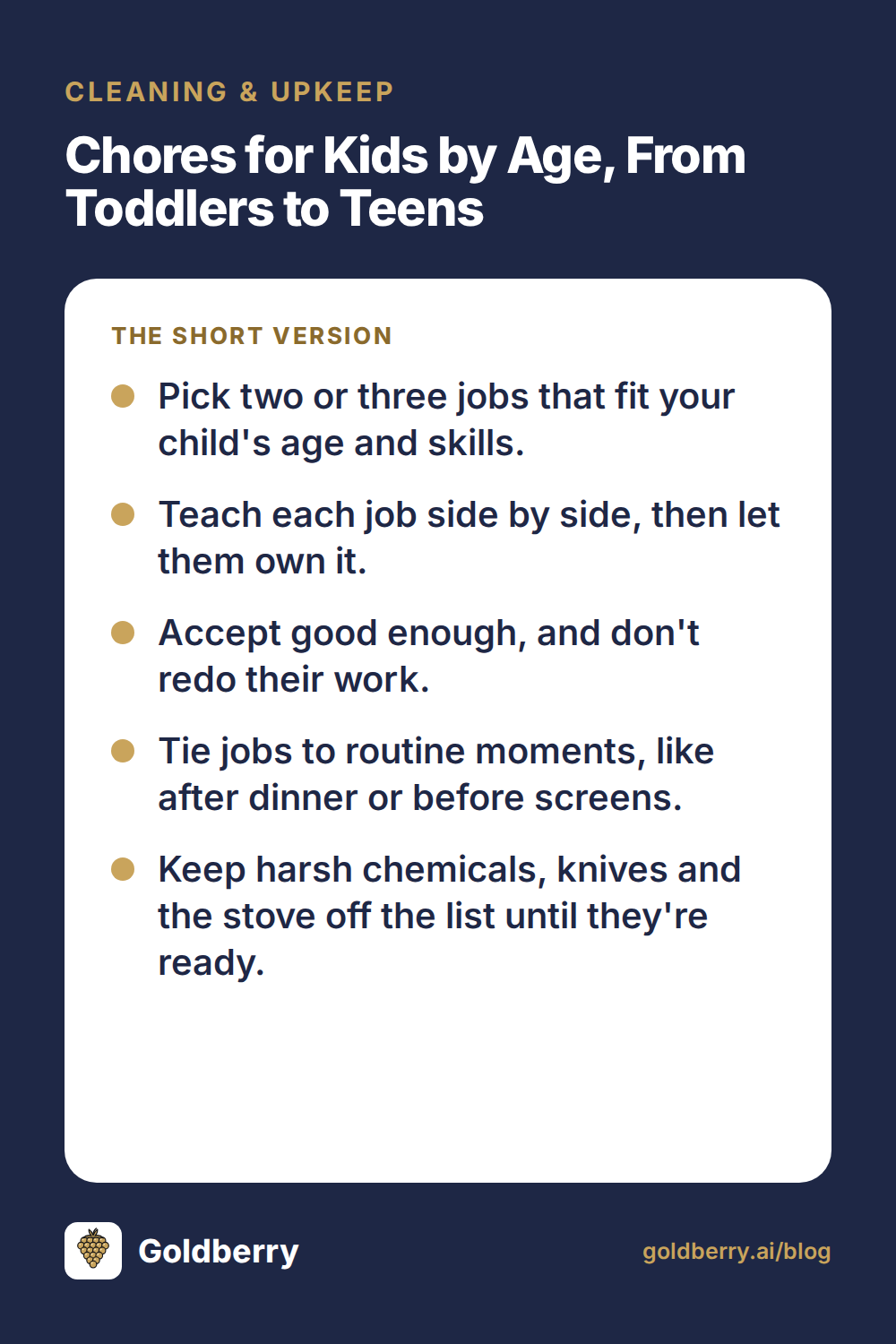
Chores for Kids by Age, From Toddlers to Teens
A realistic list of chores for kids by age, from toddlers to teens, plus how to teach each job once and set routines that give parents real time back.
Good chores for kids by age start small: toddlers put toys in a bin, early school kids empty the dishwasher, and kids can run a load of laundry with help from about 10 and do it alone by about 12. Teach each job once, side by side, then hand it over for good.
Every child is different, so treat the list below as a guide. Start where yours is and add jobs as they grow.
Age appropriate chores at a glance
Use this table as a menu. Kids can usually do everything in their own band and the bands below it.
| Age | Realistic chores |
|---|---|
| 2 to 3 | Put toys in a bin, put dirty clothes in the hamper, put books on a low shelf, wipe a small spill with a cloth, carry their plastic plate to the counter |
| 4 to 5 | Pull up the covers on their bed, set the table (no knives), clear their own plate, put away their own clothes, match socks, water plants, dust low surfaces, put away groceries in low cupboards |
| 6 to 8 | Empty the dishwasher (skip sharp knives), fold towels, feed pets, sweep, take out recycling, pack lunch from prepped food, wipe the bathroom sink |
| 9 to 11 | Load the dishwasher, run a load of laundry with help, vacuum and mop, take out trash, clean a sink and mirror, make simple snacks, change their sheets |
| 12 and up | Do their own laundry start to finish, clean a full bathroom, cook a simple meal on the stove, wash dishes by hand, mow with a push mower after training, shop from a list |
Some six-year-olds fold towels neatly, and some ten-year-olds still need reminders to flush. Both are normal.
Watch what your child can actually do and adjust.
Start with jobs that help them
The easiest first chores are ones that serve the child: putting away their own clothes, clearing their own plate, packing their own bag. They see the point right away. Family jobs, like setting the table for everyone, come next.
Teach once, side by side, then let go
Kids often resist chores because they don't know how to do them well yet. A little training up front saves a lot of nagging later.
- You do it, they watch. Talk through each step out loud. Keep it short.
- You do it together. They do the easy parts and you do the rest.
- They do it, you watch. Stay nearby and help only when asked.
- They own it. Step away. Check the result, not the process.
Expect a few weeks of practice per job before they truly own it. For something like loading the dishwasher, teach one clear method, like the one in this guide on how to load a dishwasher, so everyone does it the same way.
Accept good enough
A towel folded in thirds instead of quarters is still folded. A bed with lumps is still made. If you redo the job in front of them, they learn their effort doesn't count.
Pick one thing to correct at a time, and only if it matters. "Shoes go in the bin, not next to it" is worth saying. A slightly crooked fork is not.
Same jobs, same days
Kids handle chores best when they know exactly what's coming. A simple chore chart for kids makes that visible.
Keep the chart short. Two or three daily jobs and one weekly job per child is plenty to start. List each job with a day next to it, and keep it the same week after week.
| Child | Daily | Weekly |
|---|---|---|
| Age 5 | Clear own plate, put toys away | Match socks on Sunday |
| Age 8 | Empty dishwasher, feed the dog | Vacuum the living room on Wednesday |
| Age 12 | Load dishwasher after dinner, wipe counters | Own laundry on Saturday |
Put the chart where everyone sees it, like the fridge or a shared screen. Younger kids do well with pictures instead of words. Older kids can get reminders on a phone, so you don't have to be the reminder.
Tie chores to routine moments
A chore with no set time becomes a fight. A chore tied to something that already happens becomes a habit.
Good anchors:
- Right after breakfast: make bed, put dishes in the sink or dishwasher.
- After school: empty lunch box, hang up backpack and coat.
- After dinner: clear plates, wipe the table, load the dishwasher.
- Before screens: finish the daily job first, then screens go on.
- Before bed: clothes in the hamper, toys back in the bin.
The "before screens" rule does a lot of work. The chore becomes a step in the routine instead of a debate. Kids learn that the fastest way to their show is to get the job done.
Rotate the jobs nobody wants
Every house has a job everyone hates. Scrubbing the toilet, taking out stinky trash, cleaning the litter box. If one child always gets it, resentment builds fast.
Rotate unpopular jobs every week. Write the rotation on the chart so it isn't up for debate. Older kids can take the harder version of a job, while younger kids take the easier half.
You can also let kids trade jobs, as long as both agree and the job still gets done. Negotiating is a life skill too.
Keep it safe
Some limits should stay firm until a child is clearly ready:
- No harsh chemicals for young kids. Give them water in a spray bottle, a mild dish soap solution or a damp microfiber cloth. Keep bleach, oven cleaner and drain cleaner locked up or out of reach.
- Never mix cleaning products. Teach older kids this rule directly, since mixing bleach with ammonia or vinegar gives off toxic gas.
- Knives with supervision. Start with butter knives and soft foods. Move to sharp knives only when they follow instructions and keep fingers tucked.
- Stove with supervision. Stay in the kitchen until they handle hot pans, handles and spills calmly. Teach them to turn pot handles inward.
- Mowers and power tools last. Pediatric guidance puts push mowers at 12 and up and riding mowers at 16 and up. Power tools only with training and an adult supervising.
Readiness varies more than age does. A careful nine-year-old may be ready for things a distracted twelve-year-old is not.
The payoff for parents
Teaching chores is slower than doing them yourself during those first few weeks. After that, the time comes back every single day.
The biggest wins are dishes and laundry. Once a child empties the dishwasher daily, that job is off your plate for good. Once a 12-year-old handles their own laundry start to finish, their load comes off your list for good.
A simple laundry system makes this easier, because kids can follow the same steps every time. Add these jobs to your family cleaning schedule so they're part of the plan, not a favor.
Kids also leave home knowing how to run one. That is worth the slow start.
FAQ
What chores can a 5-year-old do?
Most 5-year-olds can make their bed by pulling up the covers, set the table without knives, clear their own plate, match socks, water plants and dust low shelves. They can also put away their own clothes and toys. Keep it to two or three jobs a day, and show them each one a few times before you expect it done alone.
How many chores should a child have?
Begin with two or three short daily jobs and one weekly job, which builds the habit without turning every evening into a negotiation. Add a new job every few months as they get faster. Younger kids need jobs that take a few minutes, while teens can handle longer ones.
How do I get kids to do chores without nagging?
Tie each job to a moment that already happens, like after dinner or before screens, and keep the same jobs on the same days. Post a simple chart so it does the reminding instead of you. Check the result once, say thanks and skip the redo.
Should you pay kids for chores?
Many families keep everyday jobs, like clearing plates and tidying rooms, unpaid because everyone who lives in the house helps. Bigger extra jobs, like washing the car or raking the yard, can earn money. That keeps basic help from becoming a transaction while still teaching kids about earning.