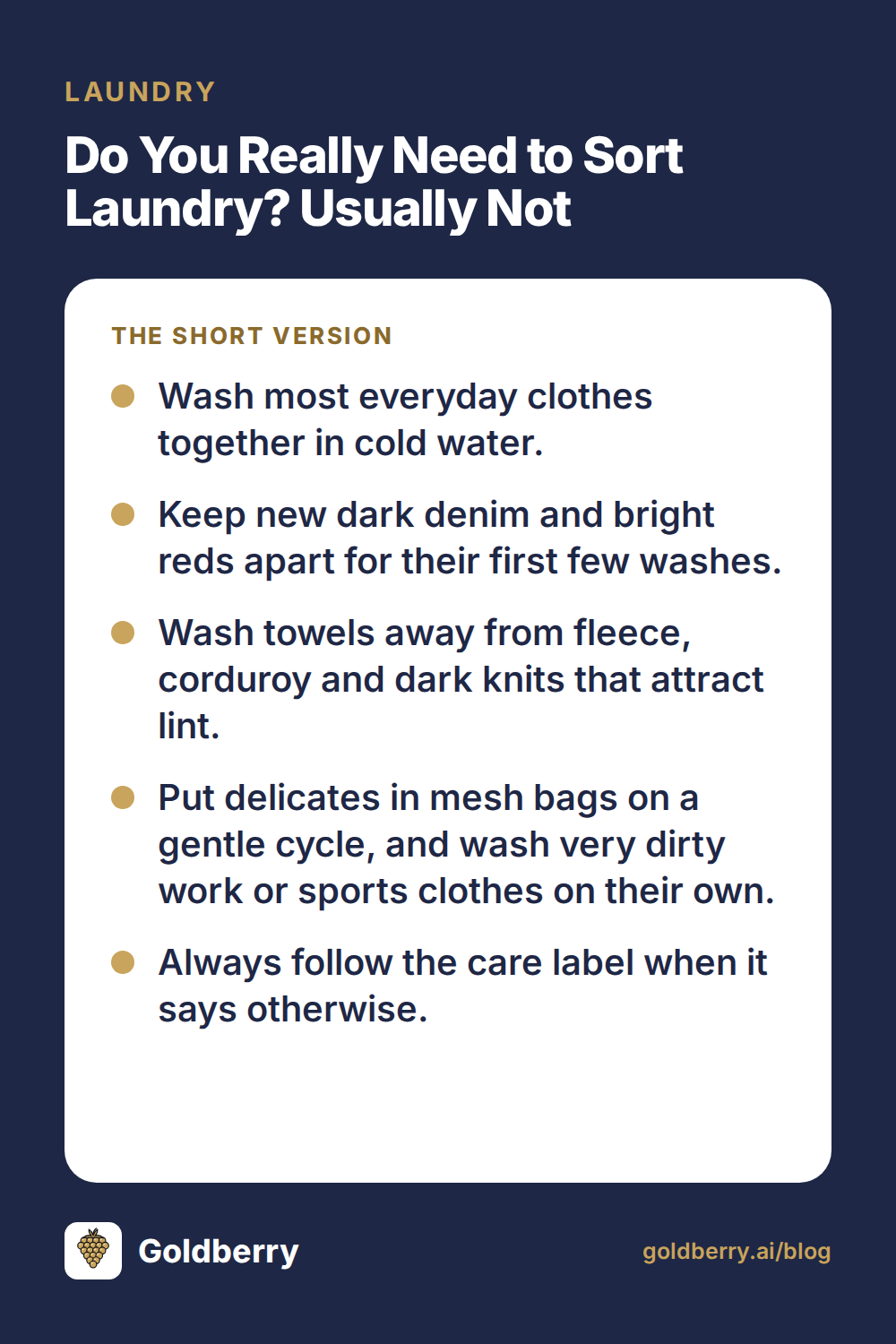
Do You Really Need to Sort Laundry? Usually Not
Do you need to sort laundry? With cold water and modern detergent, most clothes can wash together. Here are the few exceptions worth keeping apart.
For most everyday clothes, no, you don't need to sort laundry by color. With cold water and a modern detergent, lights, darks and colors can usually go in the same load without trouble.
There are a few real exceptions, and they're easy to remember. Handle those, sort by person instead of by color, and you skip a step on every single load.
Why the old rules relaxed
Sorting by color made sense when hot water was the default. Hot water helps loose dye escape, so one red shirt could tint a whole load pink.
Most people now wash in cold or warm water, and today's detergents are made to clean well at low temperatures. Put together, color transfer in a mixed cold load is uncommon for clothes that have already been washed a few times.
Cold water also uses less energy than hot, so you save a little on every load. It's gentler on fabric too, which helps clothes last longer.
What can go in together
Most of what a family wears in a week can share a load:
- T-shirts, polos and casual tops in any color
- Jeans and pants that have been washed several times
- Kids' everyday clothes
- Socks and underwear (unless you're keeping whites bright, see below)
- Pajamas and loungewear
- Lightly worn workout clothes
Use a cold or warm setting, a normal cycle, and don't overload the drum. Clothes need room to move to get clean.
The real exceptions
A few things are worth keeping separate. None of them take long once you know them.
New dark denim and bright reds
New dark jeans, deep indigo, and bright red or hot pink items can bleed for the first few washes. Wash them alone or with similar colors, inside out, in cold water. After a few washes they can usually join the regular load.
If you're unsure, wet a hidden spot and press a white cloth against it. If color comes off, keep washing that item separately for now.
Whites you want to keep bright
White shirts, socks and undershirts slowly turn gray or dull when washed with colors over and over. They don't usually get dyed, they just lose their brightness. If bright white matters to you, keep a small white load and use a detergent or additive meant for whites, following the label.
If it doesn't matter (kids' play socks, say), wash them with everything else.
Lint shedders and lint magnets
Towels and chenille throw off lint. Fleece, corduroy, velvet, dark knits and some athletic wear pick it up. Washing towels on their own fixes most lint problems, and it lets you use a warmer setting on towels if the label allows.
Delicates
Lace, bras, thin knits and anything with hooks or straps can stretch or snag. Put them in a zippered mesh bag and wash them on a gentle cycle with other light items, or hand wash if the label says to. Keep them out of heavy loads with jeans and towels, which can crush and stretch them even inside a bag.
Heavily soiled clothes
Muddy sports uniforms, greasy work clothes, and anything with paint or oil should wash on their own. Dirt and grease can settle back onto cleaner clothes, and these loads often need pretreating and a longer cycle.
Wash together or keep separate
| Item | Together or separate? | Notes |
|---|---|---|
| Everyday tops and tees, any color | Together | Cold or warm, normal cycle |
| Jeans that have been washed before | Together | Inside out helps them hold color |
| New dark denim | Separate | First few washes, cold, inside out |
| New bright red or pink | Separate | Until a color test comes out clean |
| Whites you want bright | Separate | Use a whites-safe detergent or additive |
| Towels | Separate | Shed lint and take longer to dry |
| Fleece, corduroy, dark knits | Together, away from towels | They attract lint |
| Delicates and bras | With light items, in a bag | Gentle cycle, never a heavy load |
| Muddy or greasy clothes | Separate | Pretreat, longer cycle |
| Wool and "dry clean only" | Follow the label | Often hand wash or dry clean |
Dye-trapping sheets as insurance
Dye-trapping sheets go in the washer and trap loose dye in the water before it lands on other clothes. They're a cheap way to feel safe when you add something new to a mixed load.
They won't make it safe to wash a brand-new red sweatshirt with white sheets. Treat them as backup for the exceptions above, not a way around them.
Sort by person instead
Once you stop sorting by color, sort by person. Give each person their own hamper and wash it as one load. When it comes out of the dryer, everything belongs to the same person, so folding goes straight into one basket.
You drop two piles from every load: the color piles before washing and the owner piles after drying. It's the backbone of a simple family laundry system. Towels and sheets go on their own day, which handles the lint problem at the same time.
To save even more time once the dryer stops, see which clothes you don't need to fold.
Always check the care label
Care labels tell you the safe water temperature, whether to tumble dry, and whether bleach is allowed. They win over any general rule, including the ones here.
A few quick reminders:
- Read the label the first time you wash something new. After that, you'll know.
- Follow "wash separately" or "wash with like colors" on new items, at least for the first few washes.
- Use chlorine bleach only on items whose label allows it, with just water and regular detergent. Never mix bleach with ammonia, vinegar or other cleaners.
FAQ
Can you wash colors and whites together?
Yes, for most clothes that have already been washed a few times, in cold water. The main risks are new dark or bright items that bleed, and whites slowly looking dull over many washes. Keep new dark denim and bright reds separate at first, and give whites their own load only if keeping them bright matters to you.
What happens if you don't sort laundry?
Usually nothing bad, since most mixed cold loads come out fine. The problems people run into are a new red item tinting lighter clothes, towel lint sticking to dark clothes, and whites looking dull over time. Handle those few exceptions, sort everything else by person, and you get the time savings without the surprises.
Does cold water really get clothes clean?
For everyday dirt and sweat, yes. Modern detergents are made to work in cold water, and most everyday loads come out clean. Use warm or hot water for heavily soiled items, towels or bedding when the care label allows it, and pretreat tough stains before they go in the washer.
How do I sort laundry if I still want to?
Start with two groups for most weeks: everyday clothes and towels. Add a separate load only when something calls for it, such as new items that bleed, heavily soiled clothes, or whites you want to keep bright, and never put the bleeders and the dirty clothes together. Delicates go in a mesh bag on a gentle cycle with other light items.